

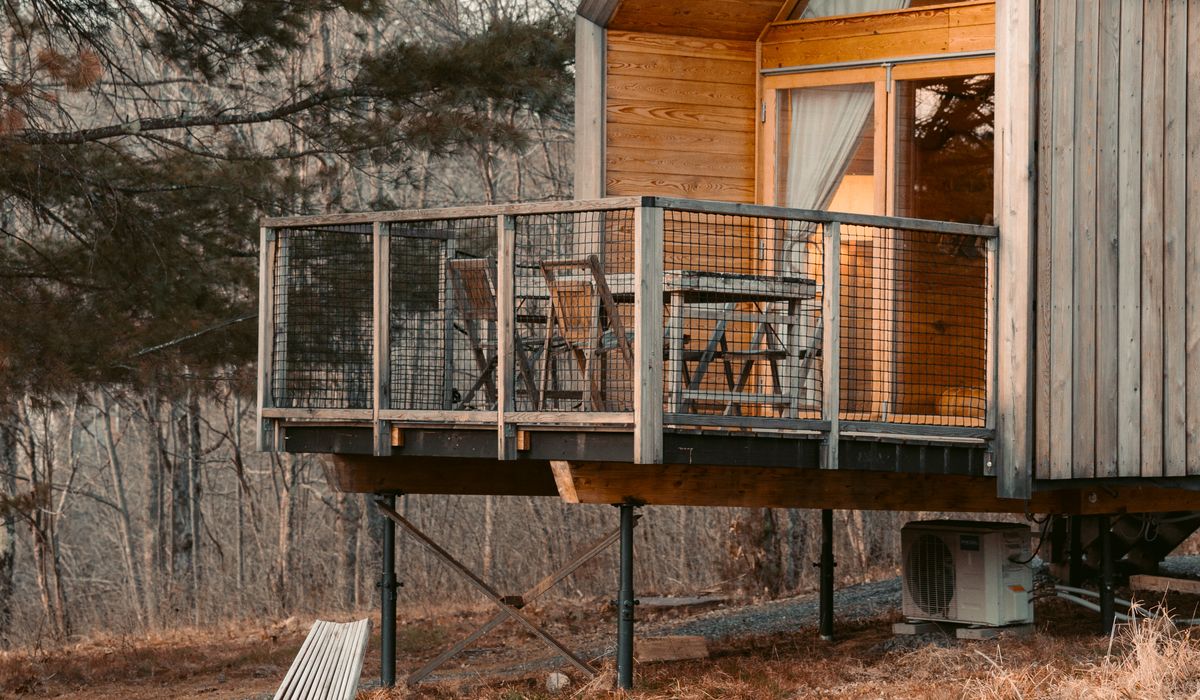
A cabin kitchen is a different animal to a kitchen at home. The walls are often timber, the space is tight, and the room may sit unheated for weeks at a time. That changes what good storage looks like. You are not trying to recreate a fitted kitchen in miniature; you are trying to keep a small number of tools and ingredients accessible, dry and away from mice, using surfaces that cope with damp and cold.
The guiding principle is simple: hang what you can, shelve what you use daily, and hide the rest in narrow, sealed containers. Anything that traps moisture behind a closed door in an unheated building will eventually smell of the building rather than of food. So favour airflow, and lean towards open storage for equipment and sealed storage for anything edible.
Pans, mugs, utensils, chopping boards and oven gloves all have loops or handles, which means they can live on a wall instead of in a cupboard. A wall-mounted rail or a row of hooks uses perhaps 20mm of depth, where a cupboard holding the same pans would eat 300mm of floor space you cannot spare.
Fix the rail properly. In a timber cabin, screw a 25mm timber batten into the studs or into the structural frame first, then fix the rail to the batten. Screwing hooks straight into thin cladding will hold a tea towel and nothing else. Set the rail roughly 1450–1550mm above the worktop so pans clear the surface but remain within easy reach, and check clearance for your tallest pan before you drill.
Open shelving suits cabins because it lets air move and makes a small room feel less hemmed in. But depth and spacing matter more than the style of the brackets. A shelf 150–200mm deep will hold jars, tins and small bowls without overhanging the worktop; 250mm is enough for plates and larger pans.
Allow 300mm between shelves for jars and mugs, and 200mm for tins and spices. Use 18mm plywood or kiln-dried pine, sealed with a food-safe oil or a hard-wearing varnish — bare timber in a steamy cabin kitchen will swell and stain. Avoid shelving directly above the hob, where grease and steam will settle on everything you store there.
Reserve the shelf at eye level for what you actually reach for, and put the occasional items on the top shelf. A shallow basket or two will stop small items drifting into a jumble without hiding them away.
Almost every compact kitchen has dead space. Look for gaps of 150–200mm beside a sink unit, a small fridge or a gas bottle, and turn them into pull-out storage. A shallow basket on a pair of runners, or a ready-made narrow pull-out unit, will hold oils, spices, cloths and cleaning supplies in a slot that was previously wasted.
Corners in a small cabin are best treated honestly rather than cleverly. A carousel wastes valuable space in a tiny unit; stacking baskets or a pair of deep, lidded boxes will usually serve you better and cost far less.
Under the sink, put a low crate for bulky bottles and use the door for hooks holding brushes and cloths. In a shallow drawer, fit a lip or a length of moulding to stop jars rolling, or stand spices on a simple stepped riser so you can read every label at a glance. A small basket by the door for kindling and firelighters keeps the cabin tidy and stops grit being walked through the kitchen.
Damp and small visitors will undo the tidiest storage in a season. Move dry goods out of cardboard and into airtight glass jars or tins, and keep them lifted off the floor on a crate or shelf rather than in a low cupboard. Flour, rice, pasta and cereals are the first things to attract mice, so store only what you will use in a visit or two.
Avoid MDF and chipboard anywhere near water; solid timber and powder-coated metal last far longer. At the end of the season, take perishables home, wipe down the shelves, and leave cupboard doors ajar so air can circulate through the winter months. A small cabin kitchen does not need more storage — it needs storage that is honest about the conditions it lives in, and then it will serve you beautifully for years.

Snugcabin An honest, everyday look at the things that make life a little better — with advice you can actually use.

Snugcabin No rushing, no fuss — just thoughtful notes and practical help, written by people who care.

Balance rustic wood with pale linens and vintage finds to make a shepherd hut feel charming without feeling cramped.

Comments
ALina Kelian
19th May 2018 ReplySnugcabin Real stories, useful guides and the occasional recommendation, all in one calm corner of the web. ullamco laboris nisi ut aliquip ex ea commodo consequat.
Rlex Kelian
19th May 2018 ReplySnugcabin Simple, genuine and looked after with care — the kind of place worth returning to. ullamco laboris nisi ut aliquip commodo.
Roboto Alex
21th May 2018 ReplySnugcabin No rushing, no fuss — just thoughtful notes and practical help, written by people who care. ullamco laboris nisi ut aliquip ex ea commodo consequat.