

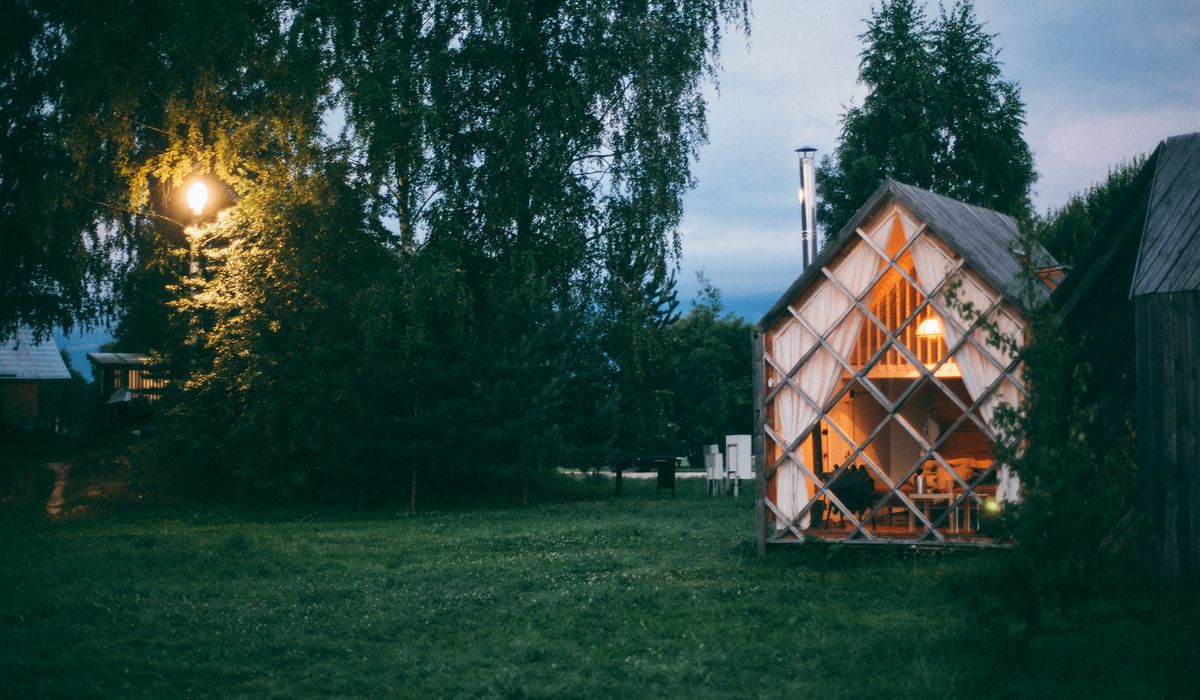
There is something quietly satisfying about walking to the bottom of the garden to start work. No commute, no train fare, no colleague microwaving fish at eleven in the morning. A garden office cabin gives you that separation between home and work that a corner of the kitchen table simply cannot, and it does not have to cost the earth. With a clear plan, a straightforward timber frame and a good eye for reclaimed materials, plenty of people build a warm, dry, genuinely usable workspace for a fraction of what a bespoke company would charge.
Before you buy a single screw, work out what you are legally allowed to build. In the UK, many garden buildings fall under permitted development, which broadly means you can put up a single-storey outbuilding without a formal application, provided it sits behind the principal elevation of the house, stays under 2.5 metres to the eaves if it is within two metres of a boundary, and does not cover more than half the land around the original house. Rules differ in Scotland, Wales and Northern Ireland, and conservation areas and listed buildings have their own constraints, so check with your local authority planning department before you commit.
Also think about the practicalities while you are still at the drawing stage:
You do not need complex engineering. A rectangular cabin of around 3 metres by 2.5 metres is a comfortable one-person office and is far cheaper per square metre than an awkward L-shape. Build the base first: either a concrete slab, or a grid of treated timbers on paving slabs with a damp-proof membrane underneath. The second option is cheaper, quicker and perfectly adequate for a light structure.
For the walls, 4x2 treated timber at 400mm centres gives you a strong, well-insulated frame without over-engineering. Use 400mm centres rather than 600mm because it stiffens the structure and makes fixing plasterboard or plywood much easier later. Build the four wall panels flat on the ground, then lift them into place and fix them together with coach screws. A flat roof with a gentle fall towards the back is the simplest option, but if you can stretch to a warm-deck design with a rubber membrane, you will avoid the condensation problems that plague cheap shed roofs.
This is where a budget build really comes into its own. Reclaimed materials are not just cheaper, they often look better, and a garden cabin is the ideal place to use them because nobody expects a showroom finish.
Be disciplined about what you accept. Free materials that are damp, rotten or full of woodworm will cost you more in time and treatment than buying fresh timber would have done.
A garden office lives or dies by its insulation. Aim for at least 50mm of rigid insulation in the floor, 75mm in the walls and 100mm in the roof. Seal every gap with expanding foam or tape, because draughts are what make cabins feel cold, not the ambient temperature. Line the inside with plywood rather than plasterboard: it is tougher, easier to fix shelves to, and far more forgiving in a space that will expand and contract with the seasons.
For power, run a properly armoured cable from the house to a small consumer unit in the cabin. This is not a job to improvise, and in England and Wales the work should be certified by a registered electrician. A couple of double sockets, an LED strip light and a small panel heater are usually enough. Think about ventilation too: a trickle vent or a small opening window will stop the cabin turning into a damp box over winter.
The biggest savings come from doing the work yourself and buying in phases. Get the shell weathertight first, then finish the inside as funds allow. Set a contingency of around fifteen per cent, because there is always something unexpected, whether it is a rotten fence post in the way or a delivery charge that doubles your timber bill. Build small, build well, and the cabin will pay for itself in the first year of not buying a season ticket.

Snugcabin An honest, everyday look at the things that make life a little better — with advice you can actually use.

Snugcabin No rushing, no fuss — just thoughtful notes and practical help, written by people who care.

Keep only what you use and love. Regular clear-outs help small cabins stay calm, airy, and easy to clean.

Comments
ALina Kelian
19th May 2018 ReplySnugcabin Real stories, useful guides and the occasional recommendation, all in one calm corner of the web. ullamco laboris nisi ut aliquip ex ea commodo consequat.
Rlex Kelian
19th May 2018 ReplySnugcabin Simple, genuine and looked after with care — the kind of place worth returning to. ullamco laboris nisi ut aliquip commodo.
Roboto Alex
21th May 2018 ReplySnugcabin No rushing, no fuss — just thoughtful notes and practical help, written by people who care. ullamco laboris nisi ut aliquip ex ea commodo consequat.