

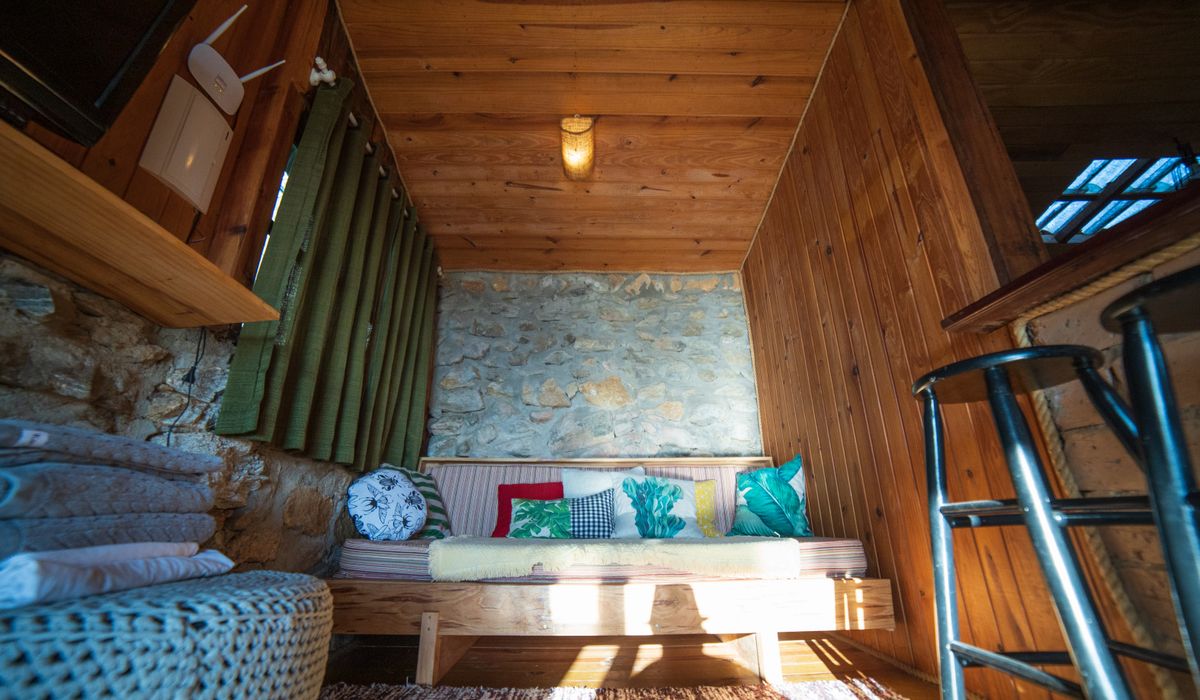
A cabin doesn't need to be big to feel generous. What it needs is warmth you can see, touch and smell, plus a little discipline about what you leave on show. Whether you're kitting out a garden room at the end of the lawn or a woodland bolt-hole you escape to at weekends, the principles are the same. Cosiness isn't a style you buy in one go — it's a set of small, deliberate decisions layered up over a season or two.
No amount of sheepskin will rescue a cabin that leaks cold air through every joint. Deal with the fabric of the building first, and everything you add afterwards will work twice as hard.
If you have a wood burner or gas heater, keep ventilation exactly as the manufacturer intended. Never block an air brick for the sake of a warmer hour.
Think in layers rather than one statement piece. Start with something nubby underfoot, add mid-layers on furniture, then finish with the soft things you actually curl up against.
Keep the colours in a tight family — oatmeal, moss, rust, deep green, charcoal — and a small space will feel calm instead of crowded. Two or three tones used repeatedly beat six competing ones.
One bright pendant overhead is the fastest way to make a cabin feel like a shed. Aim for three or four low sources at different heights instead, so light pools where you sit rather than glaring down from the middle of the ceiling.
A mirror placed opposite a lamp doubles the glow without adding a second bulb. Avoid cool white light entirely — it flattens wood, wool and skin, and no cabin has ever looked snug under it.
Small rooms show mess quickly, so storage that disappears is worth more than storage that displays. The trick is to keep the things that tell a story — a lantern, a hooked rug, a stack of books — and hide the rest.
Keep horizontal surfaces mostly clear. A jug, a lamp and a candle on a chest of drawers is plenty. If you use something weekly, leave it out; if it's seasonal, box it and store it out of sight.
The final layer is the one you can't photograph easily. A simmer pot of orange peel, clove and cinnamon on a small stove fills a cabin in minutes. Cedar, birch or a bowl of dried lavender does the same job in warmer months.
Sound matters too. A cast-iron kettle ticking as it heats, a radio on low, rain on a tin roof — these are the noises of a snug room. Soft furnishings muffle echo, which is why a bare cabin feels colder than it is.
Keep a hot water bottle in a knitted cover, a couple of enamel mugs and a folded blanket within reach of wherever you sit most. Being able to warm your hands without moving is the whole point.
In winter, go heavy: wool, flannel, lined curtains drawn at dusk, and a draught excluder across the door. Bring in a second rug and swap cushion covers for velvet or corduroy.
In summer, strip back. Swap the wool throw for washed linen, store the heaviest rug, and open the cabin up to air it properly on dry mornings so it doesn't turn musty. Light a citronella candle rather than a spice one.
Spring and autumn are the in-between months where a cabin earns its keep. Keep a light throw and a medium one to hand, leave the fairy lights on a timer, and you'll find the space comfortable from March through to October without touching the thermostat. Cosiness, in the end, is simply attention paid in small amounts — and a small cabin rewards that attention more than any large room ever will.

Snugcabin An honest, everyday look at the things that make life a little better — with advice you can actually use.

Snugcabin No rushing, no fuss — just thoughtful notes and practical help, written by people who care.

Swap harsh overhead bulbs for table lamps, wall sconces, and candles to build gentle pools of light in every corner.

Comments
ALina Kelian
19th May 2018 ReplySnugcabin Real stories, useful guides and the occasional recommendation, all in one calm corner of the web. ullamco laboris nisi ut aliquip ex ea commodo consequat.
Rlex Kelian
19th May 2018 ReplySnugcabin Simple, genuine and looked after with care — the kind of place worth returning to. ullamco laboris nisi ut aliquip commodo.
Roboto Alex
21th May 2018 ReplySnugcabin No rushing, no fuss — just thoughtful notes and practical help, written by people who care. ullamco laboris nisi ut aliquip ex ea commodo consequat.