

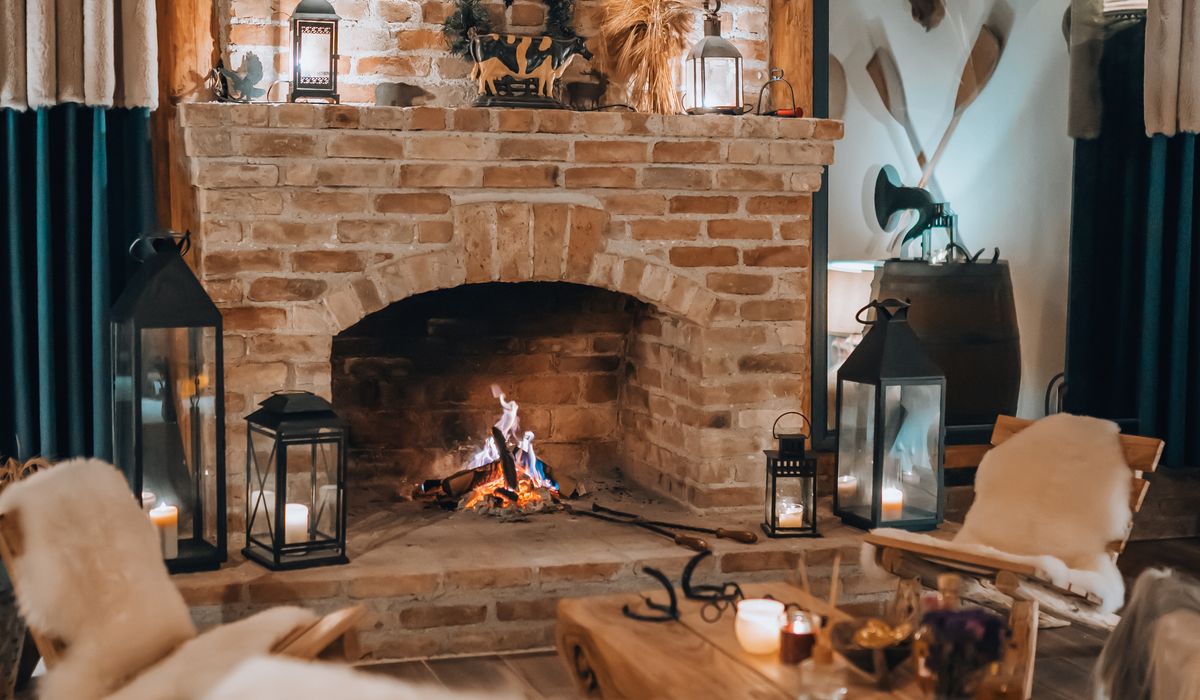
Most log burner trouble in cabins begins long before anyone strikes a match. A garden cabin, shepherd's hut or woodland retreat is usually a smaller and tighter box of air than a house, and a stove that behaves beautifully in a lounge can sulk badly in a cabin. If your burner was fitted to Approved Document J and signed off by a registered installer, you are already ahead. If it came with the cabin, or you fitted it yourself, it is worth paying someone qualified to cast an eye over it before winter.
Combustion needs air. A cabin sealed tight against the cold has very little of it spare, and a stove that cannot draw enough air will smoke back into the room, burn sluggishly and line your flue with tar. If your cabin is well insulated and draught-proofed, check that it has a permanent air vent sized for the appliance. Never block one to stop a draught.
Heat travels sideways and downwards as well as up, and cabin walls are often timber, clad in more timber, with insulation behind. Manufacturers state minimum distances to combustible materials, and those figures are not suggestions. A common figure is 300mm at the sides and rear, but many modern stoves specify considerably less when paired with a twin-wall flue or a heat shield. Never assume — read the manual for your specific model.
Book a sweep before the season starts, not after the first cold snap. As a rule, a wood-burning flue wants sweeping at least once a year, and twice if the stove is your main source of heat. Soot is only half the story; the real villain is glossy black tar, which forms when the flue runs cool and is highly flammable.
Walk around outside and look up. Check the cowl is intact, the flashing around the roof penetration is sound, and no birds have moved into the terminal. In a woodland setting, keep the flue clear of overhanging branches, and make sure it terminates well above the roofline and away from openable windows or vents. A short, stumpy flue on a cabin is a common cause of poor draught and smoky starts.
Wet wood is the single biggest cause of chimney fires and disappointing heat output. Unseasoned logs waste most of their energy boiling off water, and the steam cools the flue, which is exactly what you do not want.
Small, bright, hot fires beat one enormous damp one every time. Get the flue warm quickly with kindling and a natural firelighter, then add logs little and often rather than filling the box to the baffle. Try the top-down method: larger logs at the bottom, kindling on top, lit from above — it produces less smoke from the outset.
Once the fire is established, use the air controls rather than the door to manage it. Shutting the air right down overnight is the classic way to tar up a flue, and you will wake to a cold cabin and a blackened chimney. Open the door slowly, and refuel onto hot embers rather than a dying fire. Unless your appliance is designed to burn open, keep the door shut and use a fireguard.
Fit a carbon monoxide alarm in any cabin with a solid fuel appliance, and test it weekly. Carbon monoxide is odourless, and early symptoms feel much like flu. Smoke alarms matter just as much in a small timber structure, and a cabin should always have two ways out.
Ash can hold live embers for up to forty-eight hours. Tip it into a metal container with a lid, take it outside and stand it on bare ground well away from the cabin, decking and trees. Never put ash straight into a wheelie bin, a plastic bucket or the compost heap.
Finally, be honest about leaving a fire burning. An unattended stove in a cabin you have walked away from is a risk with no upside. Warm the space, enjoy it, and let the fire burn out before you close the door behind you.

Snugcabin An honest, everyday look at the things that make life a little better — with advice you can actually use.

Snugcabin No rushing, no fuss — just thoughtful notes and practical help, written by people who care.

A deep armchair, a wool throw, and a shelf of favourite books can turn an awkward corner into a restful hideaway.

Comments
ALina Kelian
19th May 2018 ReplySnugcabin Real stories, useful guides and the occasional recommendation, all in one calm corner of the web. ullamco laboris nisi ut aliquip ex ea commodo consequat.
Rlex Kelian
19th May 2018 ReplySnugcabin Simple, genuine and looked after with care — the kind of place worth returning to. ullamco laboris nisi ut aliquip commodo.
Roboto Alex
21th May 2018 ReplySnugcabin No rushing, no fuss — just thoughtful notes and practical help, written by people who care. ullamco laboris nisi ut aliquip ex ea commodo consequat.