

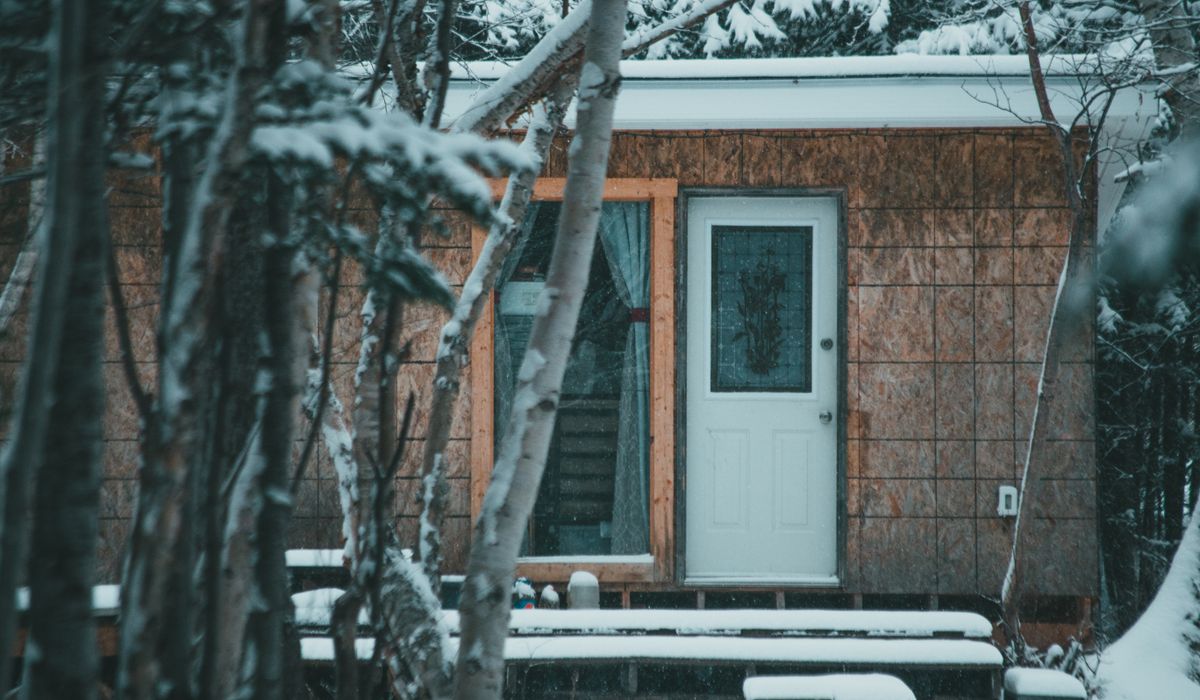
A shepherd hut is a small, honest building. Historically it was a working shelter on wheels, and that heritage is exactly what makes it so appealing now — but it also means you are styling a room that might measure twelve feet by six. Before you buy a single cushion, stand inside and work out what the hut actually needs to do. Is it a spare bedroom, a writing studio, a bolthole for two? A hut used for sleeping needs clear floor space either side of the bed and somewhere to put a mug down. A hut used as a daytime retreat can afford a chair, a small table and a bit of breathing room.
Measure everything twice. In a space this size, a piece of furniture that is five centimetres too deep will ruin the whole layout. Sketch the floor plan on paper, mark the door swing, and note where the light falls at different times of day. Everything else follows from that.
Most shepherd huts come clad inside with pine, birch ply or tongue-and-groove boarding, and that warm, honeyed timber is your best asset. The mistake is to cover it up. Resist the urge to paint every surface chalk white, and avoid dark, heavy stains that make a small interior feel like a tunnel. If the wood is orange or over-varnished, a single coat of pale limewash or a diluted white wood stain will calm it without losing the grain.
Balance the timber with plenty of pale, matte surfaces. Limewashed walls on any plastered section, a scrubbed wooden floor or a pale woven rug, and simple cotton or linen curtains all lift the light. Keep the ceiling light in colour too — a painted ceiling board reflects daylight back down and buys you a surprising amount of brightness on grey afternoons.
Where the wood is very dominant, break it up with texture rather than colour: a chunky wool throw, a rush-seat stool, a woven jute runner. Texture reads as warmth; too much pattern reads as clutter.
Nothing softens a timber box faster than good bedding. Choose washed linen or heavy cotton in oatmeal, chalk, stone or faded duck-egg blue. A duvet in a slightly loose cover, a fitted sheet, and two or three pillows in mixed sizes will look generous without taking up more room than a standard set.
Build the layers deliberately:
Keep everything washable and store spare linen in a flat box under the bed. In a hut, bed linen is furniture: it is the largest single block of colour in the room, so treat it as a design decision, not an afterthought.
Old things give a shepherd hut its charm — a battered enamel jug, a brass hook, a folding campaign chair, a small oil lamp that you have actually converted to electric. But every vintage piece must do a job. In a small space, decorative clutter becomes oppressive within a week.
Aim for a handful of pieces with real character rather than a market stall's worth of knick-knacks. Good candidates include:
Keep to a tight palette — aged cream, brass, worn wood, faded green — so the finds feel collected rather than random.
Clutter is what makes a hut feel cramped, and clutter is almost always a storage failure rather than a taste failure. Work out where things will live before they arrive.
Use the walls. A row of painted wooden pegs by the door takes coats, hats and a lantern. A narrow shelf above the window holds books without eating floor space. Hooks screwed under the top shelf of a cupboard take mugs. Baskets in woven seagrass stack on top of cupboards and swallow bedding, towels and shoes.
Choose furniture that lifts off the floor: a bed on legs, a stool with a gap underneath, a bench with a lidded seat. Anything you can see beneath makes a room feel larger. Keep surfaces as clear as you can — one candle, one small vase, one book — and put the rest away. A hut with two clear surfaces feels twice the size of one with six cluttered ones.
Lighting will make or break the scheme. Avoid a single central bulb, which flattens everything and creates hard shadows. Instead, use three or four low, warm sources: a small wall light above the bed, a rechargeable table lamp on the shelf, a string of warm-white lights tucked behind a beam, and a candle or two for evenings.
Choose bulbs around 2700K so the light is golden rather than clinical, and fit a dimmer if you can. Add a final sensory layer — a beeswax candle, a sprig of dried lavender in a jug, a wool blanket that smells faintly of woodsmoke — and the hut stops being a small wooden box and becomes somewhere you genuinely want to linger.
Style it slowly. Live in it for a week, notice what annoys you, and edit. A shepherd hut rewards restraint far more than it rewards filling every corner.

Snugcabin An honest, everyday look at the things that make life a little better — with advice you can actually use.

Snugcabin No rushing, no fuss — just thoughtful notes and practical help, written by people who care.

Draught-proofing, thermal curtains, and zoned heating keep small cabins warm while keeping energy costs under control during cold snaps.

Comments
ALina Kelian
19th May 2018 ReplySnugcabin Real stories, useful guides and the occasional recommendation, all in one calm corner of the web. ullamco laboris nisi ut aliquip ex ea commodo consequat.
Rlex Kelian
19th May 2018 ReplySnugcabin Simple, genuine and looked after with care — the kind of place worth returning to. ullamco laboris nisi ut aliquip commodo.
Roboto Alex
21th May 2018 ReplySnugcabin No rushing, no fuss — just thoughtful notes and practical help, written by people who care. ullamco laboris nisi ut aliquip ex ea commodo consequat.